
A Jeweller’s Guide to Enamelling: Techniques, Skills, and Classes in Brighton
Enamel has fascinated jewellers for centuries. From ancient Persian and Byzantine jewellery to contemporary studio work, this vibrant material allows makers to bring colour, texture, and light into metal in ways that are both durable and expressive.
At its core, enamel is powdered glass that melts under kiln heat and flows into the tiny textures of the metal, creating a durable, glass-like surface. Built up in layers and fired repeatedly, it transforms from dry powder or wet paste into a smooth, luminous finish that can be opaque, translucent, or a mix of both. Its adaptability and rich visual effect make it a favourite for jewellers wanting to deepen their creative skills.
For jewellers in the UK looking to deepen their skills, Jewellers Academy Brighton offers a series of enamelling classes in Brighton, taught by enamel artist Mahroz Hekmati. Before exploring the classes, it’s helpful to understand the key techniques that make enamel such a compelling medium.
Key Enamelling Techniques
1. Dry Application (Sifting)
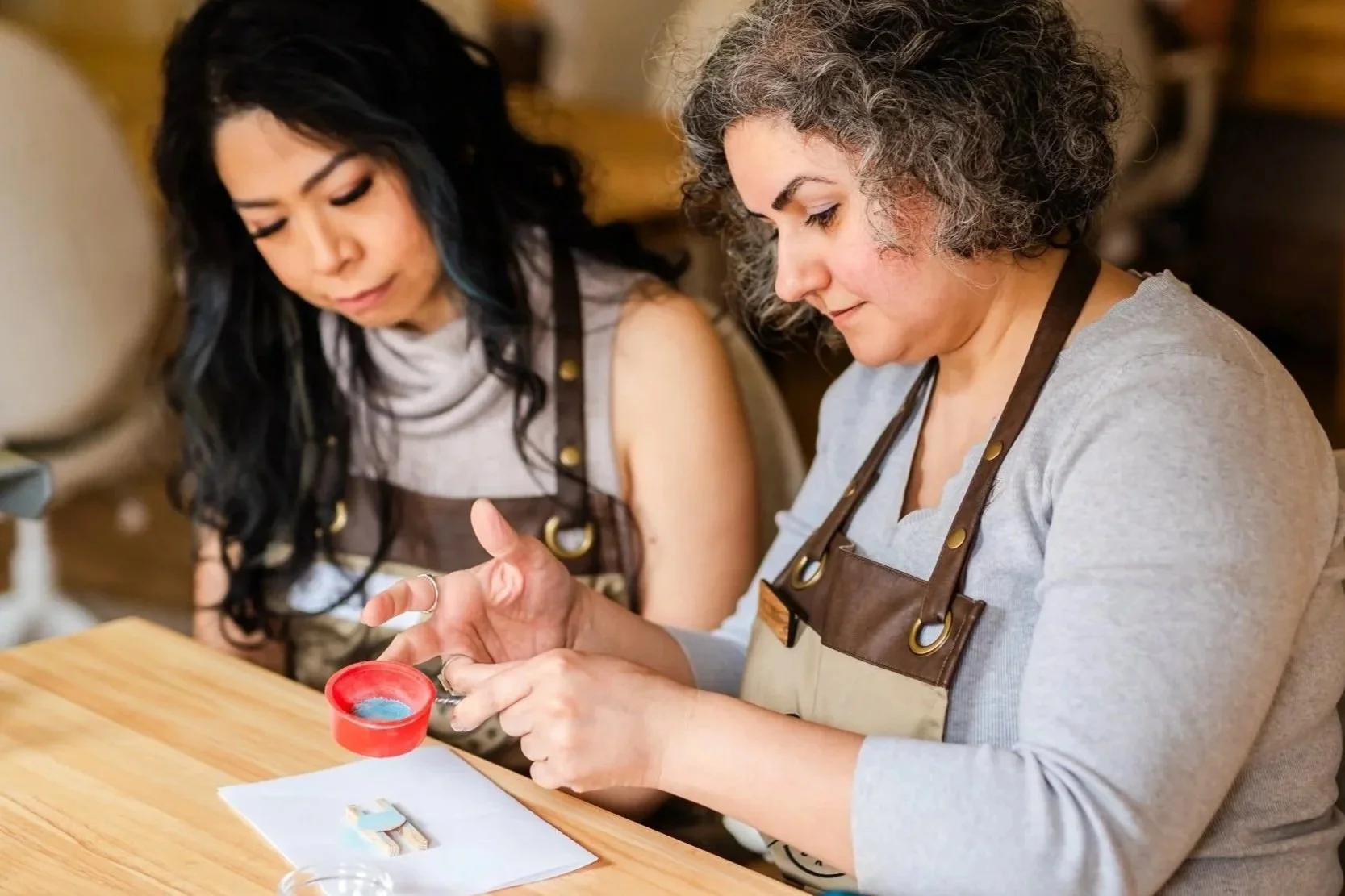
Dry enamelling, or sifting, involves sprinkling enamel powder over a prepared metal surface, often through stencils. This technique is an excellent way for beginners to explore colour and pattern while learning how enamel reacts to heat. Dry application can create soft gradients or sharp shapes depending on the stencils and layering, and it’s a fundamental skill for anyone looking to work further with enamel.
2. Wet Application
Wet application involves grinding enamel powders, washing them with water, and applying them with fine brushes. This method allows jewellers to blend colours, apply transparent layers, and control subtle shading effects. The way enamel is applied — thickness, brush strokes, and layering — directly affects the final depth, texture, and vibrancy of the piece.
3. Cloisonné
Cloisonné is a technique in which thin metal wires (typically silver or gold) are shaped into outlines and soldered onto a metal base, creating small compartments called cloisons. Enamel is then applied within these compartments. Cloisonné allows for intricate patterns, precise colour separation, and layered effects. This technique is particularly suited to detailed jewellery designs such as pendants, brooches, and fine earrings.
4. Champlevé
Champlevé involves carving, etching, or casting channels into the metal surface, which are then filled with enamel. This method works well for designs where the metal outlines themselves form a major part of the visual composition. Champlevé pieces often feature bold, geometric shapes and are ideal for exploring texture and colour contrast.
5. Basse-taille
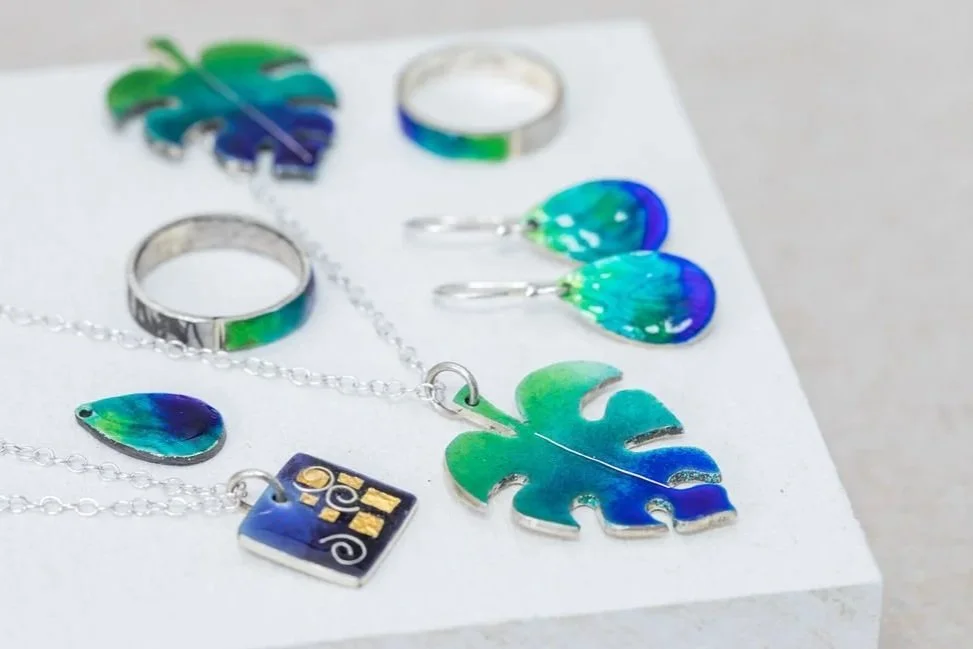
Basse-taille is a technique where transparent enamel is applied over a textured or engraved metal surface. The texture beneath shows through the enamel, producing subtle shifts in colour and light. This method can create a sense of depth and richness that is unique to enamel, making it especially effective for pieces like rings, bracelets, and statement pendants.
6. Plique-à-jour
Plique-à-jour is one of the most technically challenging enamel techniques. The enamel is suspended within open cells without a backing, allowing light to shine through. The resulting pieces resemble miniature stained glass, with a luminous, ethereal quality. Plique-à-jour requires careful planning, precise colour placement, and careful firing, making it a technique typically reserved for jewellers with some experience.
7. Foiling
Metallic foils can be incorporated beneath enamel layers to create reflective highlights or shimmer. Foils are often combined with wet application or cloisonné and can enhance the depth, contrast, and luminosity of a piece.
Why Enamelling is great for Jewellers
Enamel introduces new ways of thinking about colour, surface, light, and texture. Jewellers who work with enamel often describe it as both experimental and meditative. Each layer and firing teaches patience and precision, while also rewarding creativity and problem-solving.
Unlike paint, enamel becomes part of the metal surface, giving pieces durability that can last generations. Transparent enamels reveal textures beneath, while opaque layers provide a painterly richness. It’s a versatile medium that allows jewellers to combine traditional metalwork with expressive, colourful artistry.
Learning Enamel Jewellery in Brighton
For jewellers looking to develop these skills, Jewellers Academy Brighton provides a structured, hands-on environment to explore enamel at every level. Classes are taught by Mahroz Hekmati, a UK-based enamel artist whose work blends traditional Persian techniques with contemporary design.
Mahroz discovered vitreous enamelling in 2017 during her graduate project at the Birmingham School of Jewellery. Since then, she has focused on mastering both traditional enamel techniques and miniature painting on enamel, creating jewellery that combines vibrant colour, refined craftsmanship, and personal expression. Inspired by nature and her Persian heritage, her work emphasizes harmony between form, colour, and material.
At Jewellers Academy Brighton, Mahroz guides students through the practicalities of enamel while encouraging experimentation. Her approach balances technical instruction with creative freedom, helping jewellers gain confidence and understanding in this complex medium.
The Enamelling Classes
Our programme is designed to take jewellers from beginner to advanced techniques, building skills progressively:
Level 1 – Creative Enamelling (Dry Sifting Techniques)
This beginner-friendly class focuses on dry techniques and sifting enamel through stencils. You’ll explore copper as a base and learn how enamel behaves, developing foundational skills that underpin all future work.
Level 2 – Wet Application Techniques
Here, you’ll move on to fine silver and learn to brush enamel in liquid form. You’ll experiment with blending transparent colours, adding texture, and using techniques like basse-taille to create depth. Optional foiling may also be introduced.
Level 3 – Cloisonné
Cloisonné involves forming fine silver wire into compartments and filling them with enamel. This class develops precision, patience, and an understanding of layered colour, resulting in polished, intricate jewellery pieces.
Level 4 – Plique-à-jour
In this advanced class, you’ll learn to suspend enamel in open cells to create a “stained glass” effect. This technique requires careful colour placement and firing control, producing pieces that glow and capture light beautifully.
5-Day Enamelling Intensive
The intensive combines all four levels into one immersive week. Students work progressively from beginner techniques to advanced methods, with time to develop their own projects. This format is ideal for jewellers who want sustained practice, detailed instruction, and a deep understanding of enamel.
Our Brighton Studio
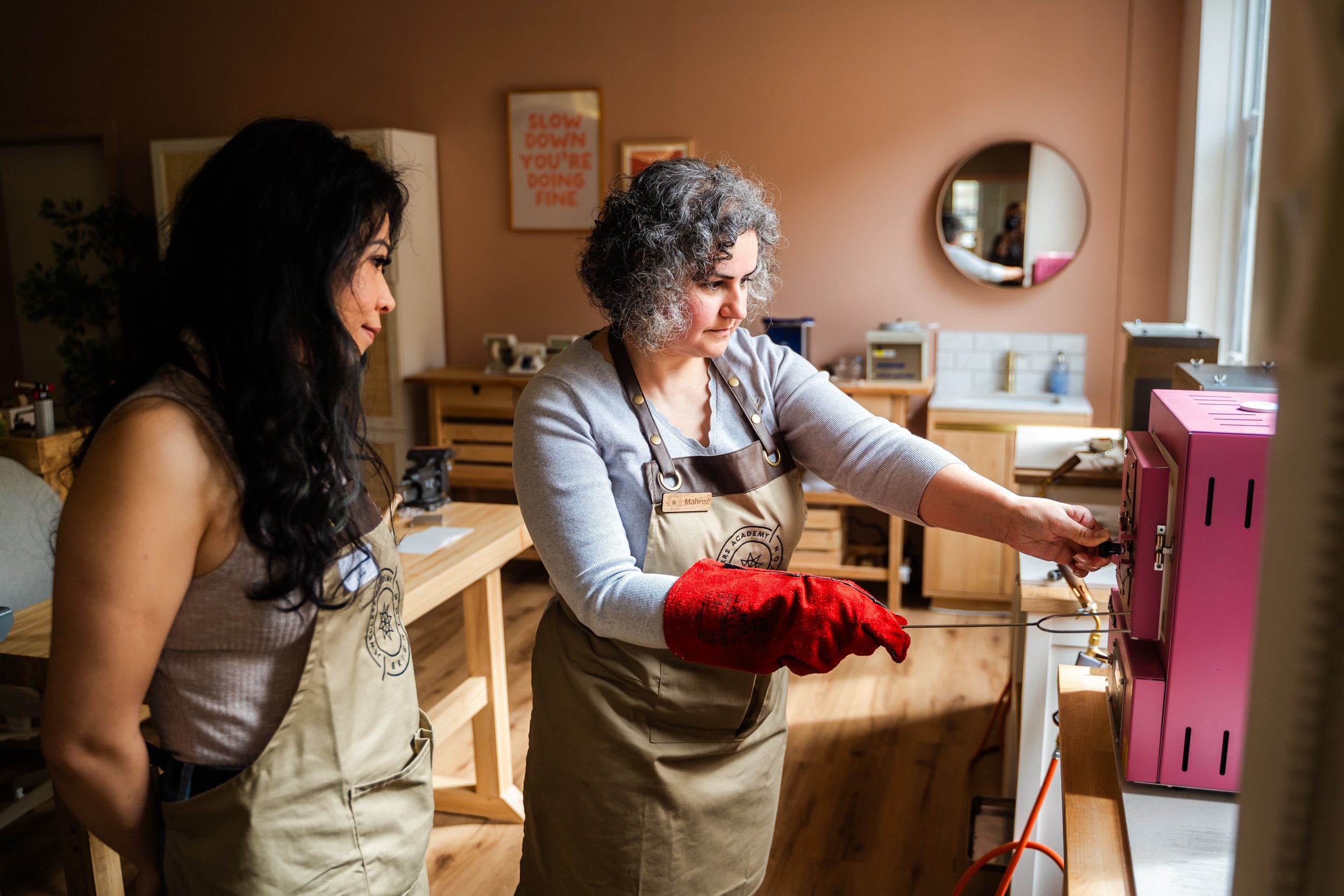
Learning enamelling in Brighton provides more than just technical instruction. Our studio is equipped with professional kilns and tools, with small class sizes to ensure individual guidance. The city’s creative environment — independent studios, galleries, and seaside energy — offers inspiration and space to focus on your craft.
Developing Long-Term Skills
Enamelling is a skill that builds over time. Even short classes provide a foundation for understanding colour, layering, texture, and firing. Once learned, these techniques can be applied to a wide variety of jewellery forms — rings, pendants, brooches, and beyond. The more you experiment, the more you’ll understand the material’s behaviour and the possibilities it offers.
For jewellers, enamel is both a creative and technical skill — one that enhances the value, appearance, and versatility of your work.
Come and have a go!
Enamel is a medium that rewards curiosity, precision, and experimentation. It combines the discipline of metalwork with the vibrancy and unpredictability of colour. Understanding its techniques — from dry sifting to plique-à-jour — opens up a world of creative possibilities.
Through Jewellers Academy Brighton’s enamel jewellery classes, jewellers can gain structured instruction from an experienced artist, explore a range of techniques, and develop their own unique style. Whether you’re a beginner or looking to refine advanced skills, working with enamel introduces new ways of thinking about jewellery, colour, and light.
By learning from Mahroz Hekmati and experimenting in a supportive studio environment, jewellers can explore the full potential of enamel — a material that combines centuries of tradition with contemporary creativity.
